
Turner Williams Jr. - Ensoleillée
(OMNISON04 / December 2023)
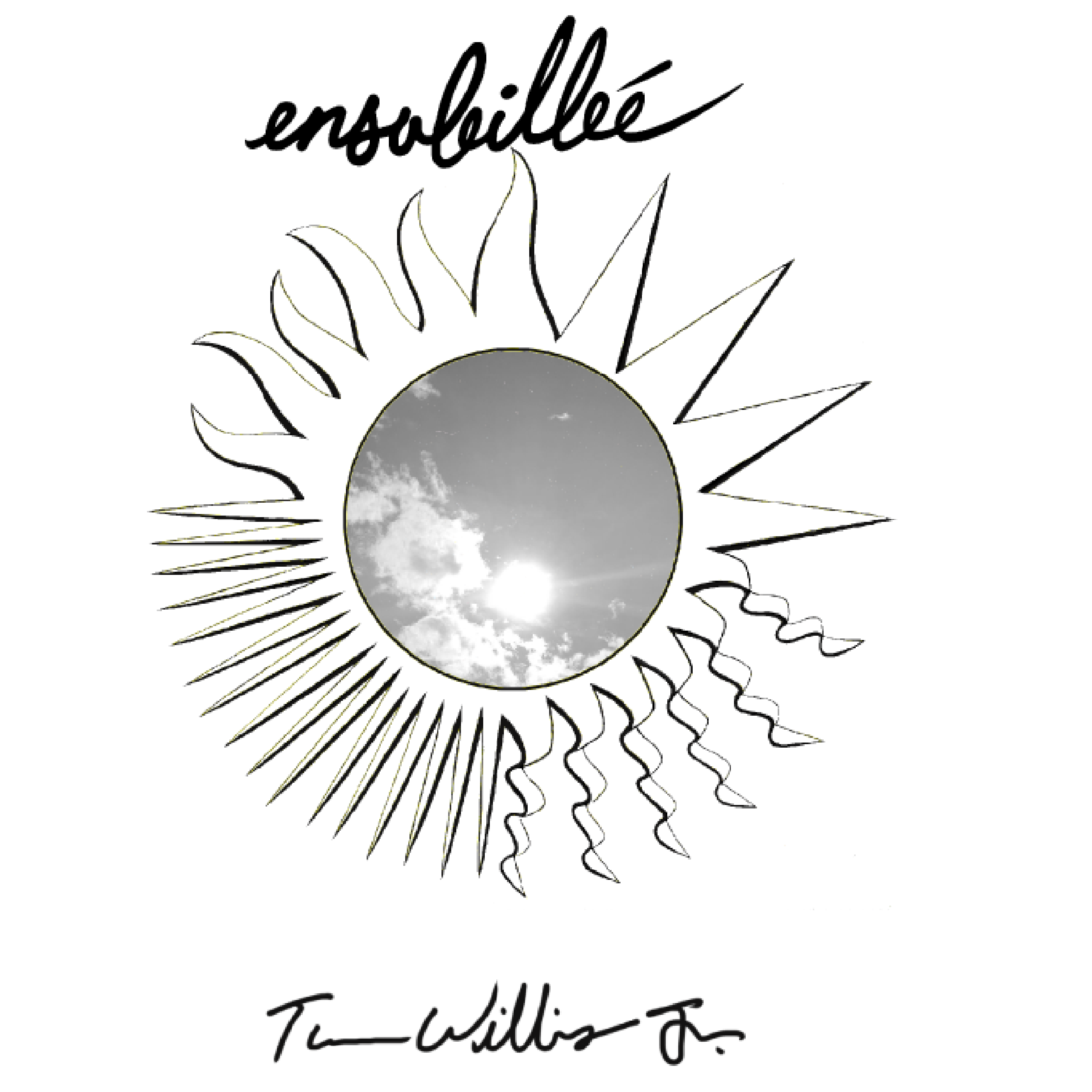
30€ - 100 copies (SOLD OUT)
"Where does Turner Williams Jr. fit ? Let's put it this way: in a lineage where the history of strings, via folk but not only, goes back to Roscoe Holcomb and John Jacob Niles (it doesn't matter if they don't play exactly the same instruments, or if they built them themselves or not), before it was extended by John Fahey, Robbie Basho, Peter Walker, or enriched by Sandy Bull's own effects, with whom the Appalachians, India or the spirit of certain Celtic-influenced ballads cohabit seamlessly with repetitive, and why not noisy, structures. Of the latter, Turner Williams Jr. continues the syncretism from Marseille, where he has lived since leaving the United States and his native Alabama. In fact, his instrument of choice, the shahi baaja, is of Indian origin, which explains why some of his many limited-edition recordings evoke a fantastical Orient. What's more, although the shahi baaja is played from a sort of retro-futuristic typewriter keyboard, its strings are akin to the dulcimer and the Vosges spruce, providing a link between his homeland, Japan, France and Pakistan - among others. The drone and sympathetic strings, reminiscent of the bulbul tarang once electrified, are reminiscent of Michael Flower, Hans Reichel's daxophone or - above all - the self-produced cassettes of the duo Davey Williams and LaDonna Smith." (Philippe Robert)
Music by Turner Williams Jr.
Drawing by Turner Williams Jr. / Design & photography by Tom Val
"A tripped-out dervish for strings and FX - New transmission from enigmatic Parisian underground micro-press Les Disques Omnison. Alabama-born musician Turner Williams Jr. (now based in Marseille) manages to pay respects to the rich tradition of American folk music whilst adding his own unique spin, indebted to years spent travelling and living overseas. His instrument of choice, the Shahi baaja, is an electrified Indian zither that is rich in overtones and timbre. Each of the six pieces here eschew any typical song structure in favour of cylindrical forms, relying on heavy use of repetition and time-based effects to create a sound that is rich both in improvisation and atmospherics. It’s an odd cultural hotchpotch that’s difficult to place, feint echoes of Celtic hammered Dulcimer (Dorothy Carter) or Michael O’Shea’s geographical dislocated Mo Chara pieces via the traditional Appalachian folk of Basho / John Fahey, Pierre Jean Croset’s shimmering harmonic lyre recordings or the most recent hit from Megabasse." (All Night Flight)
"Turner Williams Jr est un musicien originaire d’Alabama vivant aujourd’hui à Marseille. Il joue du Shahi Baaja, un instrument traditionnel indien électrique relié à des pedales d’effets. Sa musique, malgré le potentiel des repères géographiques cités plus tôt, n’est pas si simple à essentialiser. Dans ses excellentes notes de pochettes, Philippe Robert tente de relier avec beaucoup de justesse sa musique au long héritage des musiques traditionnelles, folkloriques et populaires. On retrouve pêle-mêle sur cette frise chronologique les influences raga déconstruites par la contre-culture des années 60/70, l’Acid-Folk, l’aridité et la répétitivité de l’American Primitive Guitar, le free Folk et bien d’autres choses. Pourtant, il y a toujours quelque chose qui échappe à notre volonté de mettre cette musique en boîte, de compartimenter bien nettement les choses. Sur ce disque, le mouvement est fuyant et continu, les boucles se superposent, presque toujours en ascension, pour quelquefois nous prendre par surprise sur une dissonance ou une brisure rythmique. Les sonorités et tonalités sont très originales, jamais redondantes et nous font perdre peu à peu la conscience du dispositif de base. Elles s’habillent librement de cordes, de cuivres et de percussions alors qu’elles proviennent toutes d’un seul et même instrument. Le jeu des pédales d’effets est aussi important que le Shahi Baaja lui-même et subvertit aux impasses stylistiques auquel un instrument aussi archaïque pourrait fatalement se risquer. Ce que je veux surtout dire, c’est que cette musique est loin de regarder en arrière comme nous, chroniqueur·ses, avons la fâcheuse manie de le faire. Sur ce LP produit à cent petites copies, le regard est toujours tourné vers le haut et vers l’avant. Vers le soleil. Comme il commence à cailler, je vous le conseille pour vous réchauffer." (FS, Musique Journal)